Antiepileptic drugs

Background

AEDs can be broadly categorized by their structure: aromatic or non-aromatic.

Historically, compounds were labeled as aromatic based on their distinctive aromas.

Today, aromatic compounds and AEDs are defined by containing a benzene ring or other benzene-like properties.

Benzene has a sweet odor and is found naturally (e.g., crude oil) and produced as an intermediate for use in plastics, resins, nylons, synthetic fibers.
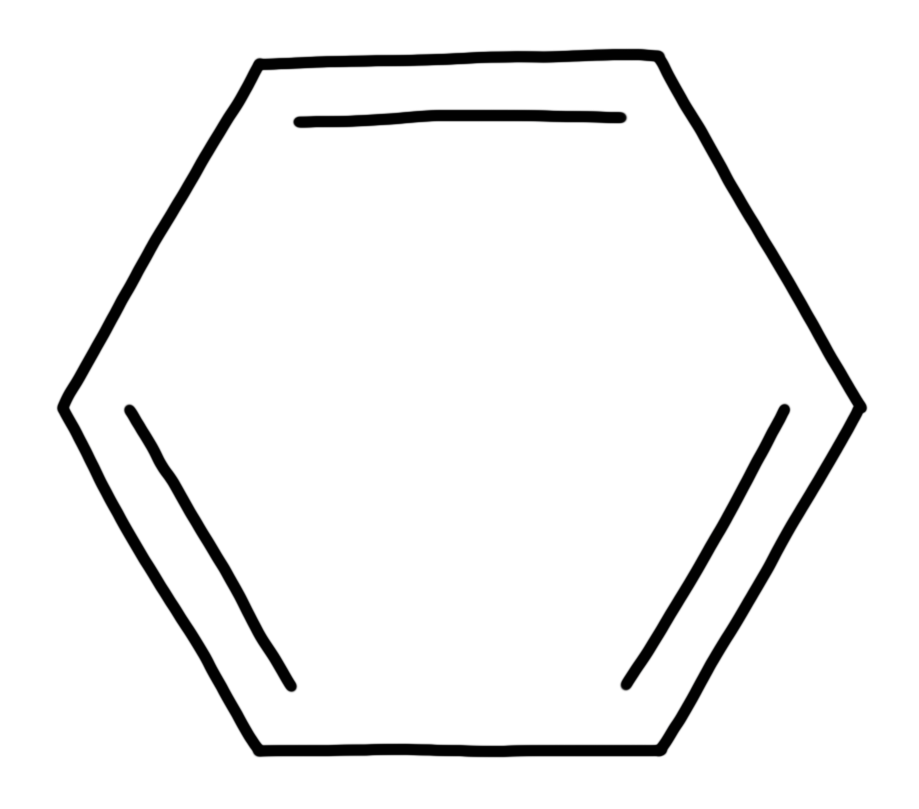
2D skeletal representation of benzene

Aromatic AEDs are associated with the greatest occurence of rash and other cutaneous ADRs, including phenytoin, carbamazepine, phenobarbital, lamotrigine, zonisamide, and oxcarbazapine.

In addition, there is greater cross-reactivity amongst aromatic AEDs (40-58%) than non-aromatic AEDs.

Of the AEDs with lower rash risk, most are non-aromatic (e.g. valproate, gabapentin, levetiracetam, pregabalin, vigabatrin, lacosamide, brivaracetam).

Table 1: Select aromatic and non-aromatic AEDs. Adapted from (Mani et al. 2019)
Aromatic AEDs Non-aromatic AEDs
  • Ethosuximide

  • Phenytoin

  • Phenobarbital

  • Carbamepine

  • Oxcarbazepine

  • Zonisamide

  • Lamotrigine

  • Clobazam

  • Felbamate

  • Primidone

  • Eslicarbazepine

  • Perampanel

  • Cannabidiol

  • Valproate

  • Gabapentin

  • Topiramate

  • Levetiracetam

  • Pregabalin

  • Vigabatrin

  • Lacosamide

  • Brivaracetam

  • History of previous AED-related skin reaction

  • Female > Male (2:1), though difference does not persist after > age 50 years

  • Older age

  • Low vitamin D concentrations

Reference

Mani R, Monteleone C, Schalock PC, Truong T, Zhang XB, Wagner ML. Rashes and other hypersensitivity reactions associated with antiepileptic drugs: A review of current literature. Seizure. 2019 Oct;71:270-278. doi: 10.1016/j.seizure.2019.07.015. Epub 2019 Jul 24. PMID: 31491658.